Your gutters may be sending distress signals right now. For New Plymouth, TKI, homeowners, keeping rainwater systems in good condition is especially important given the region's wet climate. Across the Taranaki coast and through suburbs like Fitzroy, Moturoa, and Strandon, rainfall is relentless for much of the year. Catching the warning signs early can save you from water damage to walls, foundations, and fascia boards.
This guide covers five clear signs your guttering may need replacing, plus practical advice on when a repair might be enough.
Sign 1 - Your Spouting Is Overflowing During Rainfall
Overflowing gutters are one of the most visible signs that your system can no longer manage normal water flow. You may notice water cascading over the lip during even moderate rain rather than flowing cleanly to the downpipe. This often points to a blockage, but it can also indicate that the system has settled into the wrong gradient.
In New Plymouth, TKI, annual rainfall regularly tops 1,800 mm, putting significant demand on residential rainwater systems. Guttering that was adequate when installed may no longer cope as it ages, sags, or collects debris. If clearing the gutters does not resolve persistent overflow, the underlying structure may be failing and replacement may be the better long-term option.
Sign 2 - Visible Rust, Cracking, or Holes
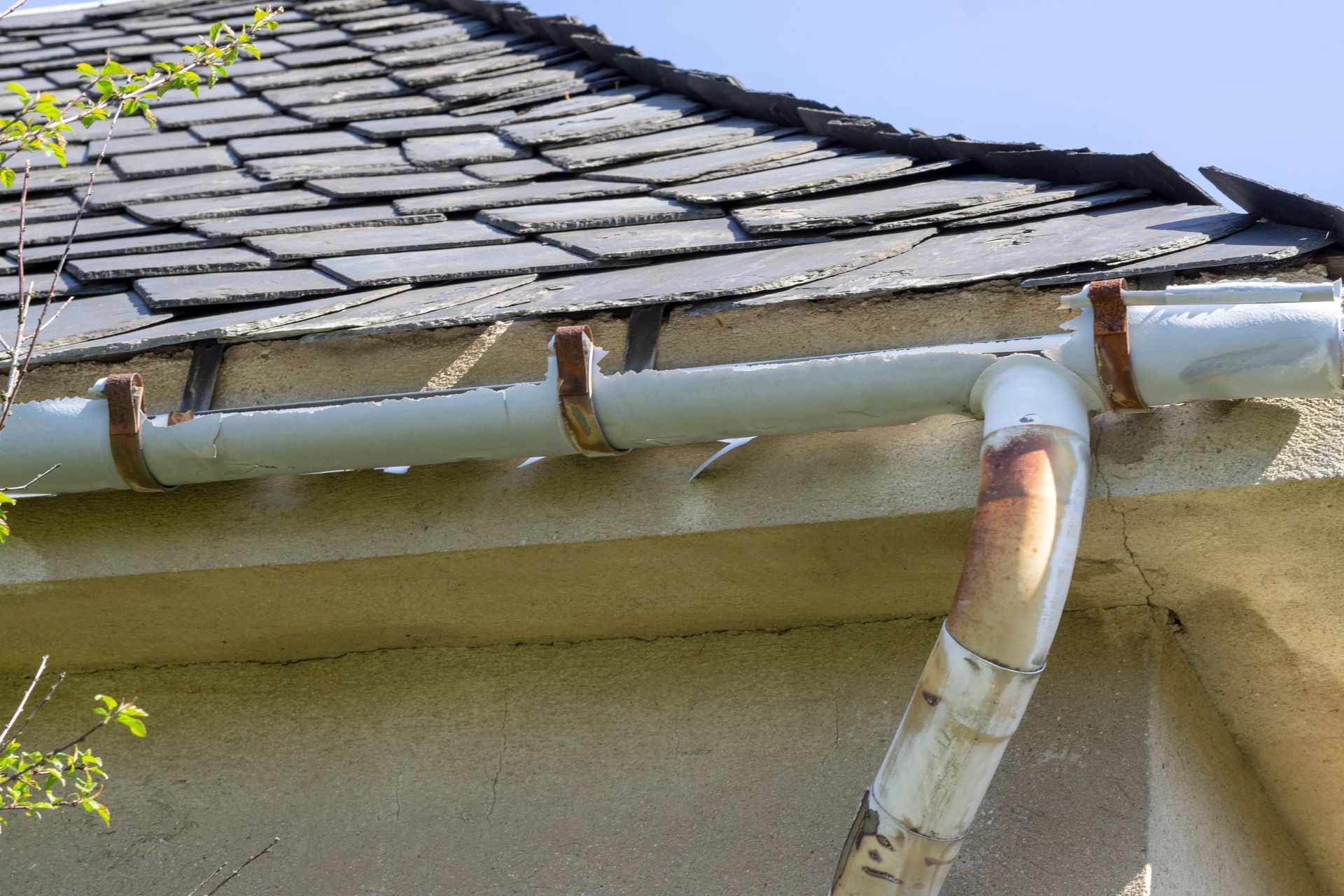
Rust stains, cracks, and small holes are clear indicators that guttering has reached the end of its serviceable life. You may spot orange streaking down exterior walls or fascia boards, and even a pinhole can allow water to escape against your home's structure during heavy rain.
Taranaki's coastal proximity and high humidity accelerate corrosion in older rainwater systems. Properties around Bell Block and Waitara are particularly exposed to salt-laden air, which speeds up surface degradation. Once rust has progressed through the material, patching rarely provides a lasting fix.
Sign 3 - Sagging or Pulling Away from the Fascia
Guttering that sags in the middle or pulls away from the fascia board can no longer do its job properly. Sagging creates low points where water pools rather than drains, eventually causing joint seals to fail and water to leak behind the system.
Bracket failure is often the cause. Brackets may corrode, crack, or pull loose from a deteriorating timber fascia, particularly on older homes in established neighbourhoods like Vogeltown or Merrilands. If multiple brackets have failed across a run of guttering, replacing individual brackets may only be a short-term fix.
Sign 4 - Leaking Joints and Persistent Dripping
Leaking joints are among the most common spouting problems and worsen over time. You may notice water dripping from connection points during and after rainfall, or damp patches forming on exterior cladding directly below the gutter line.
Taranaki's wet winters and warm summers create repeated cycles of expansion and contraction that stress joint sealants. If you find yourself resealing the same spots season after season, the underlying material may have corroded or deformed beyond the point where a sealant fix will hold.
Sign 5 - Water Pooling Around Your Foundation
Water pooling around your home's foundation after rain is a serious warning sign that your rainwater system is failing to redirect water away from the structure. When it cannot do that, water saturates the soil around the foundation and subfloor.
In Taranaki, where rainfall is spread across most months, even a modest failure can contribute to ongoing dampness and moisture ingress. You may also notice peeling paint, efflorescence on brick, or a damp smell inside the home, suggesting the problem has already been going on for some time.
When Should You Repair vs. Replace Your Spouting?
A single isolated leak or localised rust does not always mean you need a complete replacement. Localised repairs are sensible when the rest of the guttering is structurally sound. However, replacement often makes more practical sense when damage is widespread, when the system is old enough that further sections are likely to fail soon, or when the profile is no longer suited to the roof area it serves.
For Taranaki homes with high roof pitches, large surface areas, or exposed coastal positions, upgrading to a higher-capacity profile may offer better long-term performance than maintaining an ageing system patch by patch.
How Long Does Spouting Typically Last?
Metal guttering can last many years when installed correctly and maintained regularly, but lifespan varies depending on material, coating, local environment, and cleaning frequency. Coastal and high-rainfall locations like New Plymouth, TKI, can shorten that lifespan if the system is not suited to local conditions.
Can I Fix Spouting Myself?
Minor clearing of debris and flushing with water is generally manageable for a competent homeowner. Anything involving structural repairs, re-pitching, bracket replacement, or working at height on a two-storey or steep-roofed home is best left to experienced tradespeople.
Get Expert Advice on Your Spouting in New Plymouth
If you recognise any of these five signs, acting sooner rather than later can protect your home from more serious water damage. Taranaki Steelformers Ltd manufactures and supplies a comprehensive range of
spouting, gutters, and downpipes suited to New Zealand's conditions, including profiles designed to handle Taranaki's demanding rainfall. Call 0800 4 ROOFING
(0800 476 346) for a free, no-obligation quote, or
get in touch online to discuss your needs with the local team.